


Carbstone® Soundblox acoustic blocks are designed for constructing both interior and exterior walls. Thanks to the excellent acoustic parameters and resistance of the material, they can be used in any space.
They are not afraid of moisture and extreme temperatures. Mechanical impacts (e.g., ball impacts) are also no problem, making Soundblox® a good choice for sports halls, for example. They are also environmentally friendly – they are made from recycled steel and absorb CO₂ during the production process.
See the manufacturer's video showing how the use of Soundblox® blocks on a room model affects the reduction of reverberation time. We also conduct similar simulations for our customers.
Plan the acoustics of your facility with Baukustik before it is built. Take a look at our offer of services such as simulations or acoustic studies.

Using Soundblox® really pays off! When building with ordinary concrete blocks, the subsequent reduction of reverberation and improvement of room acoustics involves the need to install additional sound-absorbing materials (such as mineral wool acoustic panels). This takes time and space.
With Soundblox® blocks, you don't have this problem because they absorb sound and insulate acoustically. This makes them a perfect solution, for example, in cafes, movie theaters or sports arenas - anywhere we know it's bound to be noisy. For this reason, Soundblox® is our bestseller on industrial hall construction sites.
Carbonation is a natural process in which calcium-containing materials react with carbon dioxide to transform into calcium carbonate. Although the ancient Romans already knew how to make clever use of this process, for a long time it was of little importance in construction technologies. Until now.
For the process, in addition to CO₂, you need a source of calcium oxide - in this case, steelmaking slag. It is a byproduct of the steel industry and has been recycled for years to recover metal and grit. But thanks to a patented process, by adding CO₂, today it is gaining a whole new use - sustainable, high-quality building materials.

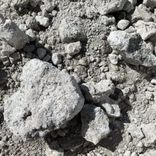
Slag is a waste product of the steel industry

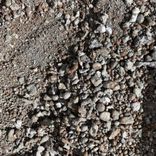
In the recycling process, steel is separated and then recovered

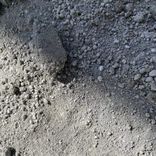
The remaining mineral fraction forms the basis of the final product


We supplement the mineral fraction to get a concrete-like structure without cement

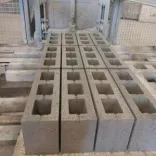
The material is pressed into blocks or other forms, which are fed into a drying chamber

In the drying chamber the curing process with CO₂ takes place, and after 24 h the blocks are ready for transport and use!
Karta techniczna Carbstone Soundblox Typ A.pdf
(PDF, 792 KB)
Karta techniczna Carbstone Soundblox Typ G.pdf
(PDF, 775 KB)
Karta techniczna Carbstone Soundblox Typ N.pdf
(PDF, 809 KB)
Karta techniczna Carbstone Soundblox Typ W.pdf
(PDF, 814 KB)
Carbstone Soundblox – Porownanie Typow.pdf
(PDF, 223 KB)
Wytyczne uzytkowania Soundblox.pdf
(PDF, 744 KB)
Need other data needed for your project or personalized product?


With a large selection of mineral wool fillings, you can choose the effectiveness of the blocks to suit your specific investment and your needs.
The blocks can also be freely finished - for example, painted or graffiti can be made on them (without obstructing the acoustic openings). Thus, they can become a really interesting element of the interior or facade.
Our employee will tell you about Soundblox® block plaster, send you documents and create a quotation for you.


